

An HR Business Partner (HRBP) is a strategic human resources professional who works closely with business leaders to align people strategies with organizational goals. Unlike traditional HR roles that primarily focus on administrative tasks, HR Business Partners help improve workforce planning, employee performance, leadership development, talent management, organizational design, and business outcomes. HRBPs combine HR expertise with business acumen to drive long-term organizational success.
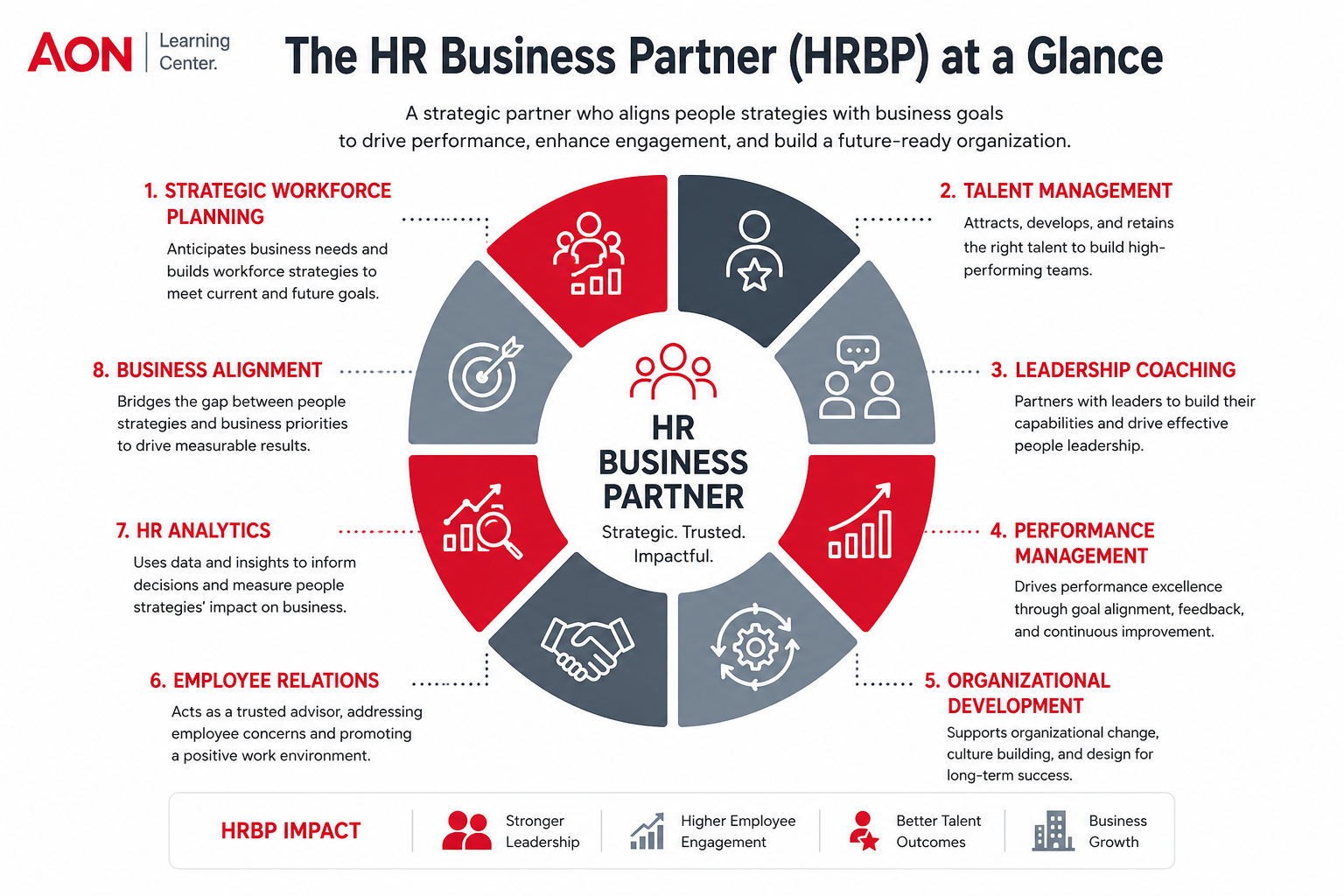
Table of Contents
- What is an HR Business Partner?
- HR Business Partner Roles and Responsibilities
- HRBP Skills You Need
- HR Business Partner vs HR Generalist
- HR Business Partner Career Path
- HR Business Partner Salary
- How to Become an HR Business Partner
- Common Challenges HRBPs Face
- Frequently Asked Questions
What is an HR Business Partner?
An HR Business Partner (HRBP) is a senior HR professional who collaborates with business leaders to develop and execute people strategies that support organizational objectives. Rather than focusing solely on operational HR tasks, HRBPs work as strategic advisors, helping leaders solve workforce challenges, improve employee engagement, and build high-performing teams.
Today’s HR Business Partners play a critical role in areas such as workforce planning, talent development, succession planning, organizational change, performance management, and employee experience. By understanding both business priorities and people needs, HRBPs help organizations create sustainable growth.
Why is the HR Business Partner Role Important?
Modern organizations recognize that people are one of their greatest competitive advantages. HR Business Partners help ensure that HR initiatives directly support business goals by:
- Aligning HR strategies with organizational objectives
- Supporting leaders through organizational change
- Improving employee engagement and retention
- Developing leadership capabilities
- Building succession plans
- Driving workforce planning
- Using people data to make informed decisions
As businesses continue to evolve, the demand for strategic HR professionals has grown significantly, making HRBP one of the most sought-after careers in human resources.
HR Business Partner Roles and Responsibilities
An HR Business Partner’s responsibilities extend beyond traditional HR functions. Common responsibilities include:
Strategic Workforce Planning
HRBPs help forecast workforce requirements, identify future skill gaps, and create hiring strategies that align with business growth plans.
Talent Management
They work with managers to identify high-potential employees, develop career progression plans, and improve talent retention.
Leadership Coaching
HR Business Partners coach managers on leadership, communication, conflict resolution, and employee development.
Performance Management
HRBPs help organizations design performance management frameworks, conduct talent reviews, and improve employee performance.
Organizational Development
They support organizational restructuring, change management initiatives, and culture transformation.
Employee Relations
While HRBPs focus strategically, they also guide leaders in resolving employee concerns, workplace conflicts, and policy interpretation.
HR Analytics
Modern HRBPs use workforce data to measure employee turnover, hiring efficiency, productivity, engagement, and business impact.
Essential HR Business Partner Skills
Successful HR Business Partners combine technical HR expertise with strong business knowledge.
Key skills include:
Strategic Thinking
The ability to align HR initiatives with business objectives.
Business Acumen
Understanding financial performance, organizational strategy, and industry trends.
Communication Skills
Influencing stakeholders and communicating effectively across all levels.
Data Analysis
Using HR metrics and people analytics to support decision-making.
Change Management
Helping organizations successfully navigate transformation initiatives.
Leadership Coaching
Supporting managers in developing high-performing teams.
Problem Solving
Addressing complex workforce challenges with practical solutions.
HR Business Partner vs HR Generalist
Although both roles are essential, their responsibilities differ.
| HR Generalist | HR Business Partner |
| Handles day-to-day HR operations | Focuses on strategic initiatives |
| Payroll and compliance | Business strategy alignment |
| Employee administration | Leadership consulting |
| Recruitment coordination | Workforce planning |
| Policy implementation | Organizational transformation |
In many organizations, HR Generalists support operational HR functions, while HR Business Partners focus on long-term business outcomes.
HR Business Partner Career Path
A typical HRBP career progression looks like this:
- HR Coordinator
- HR Executive
- HR Generalist
- Senior HR Generalist
- HR Business Partner
- Senior HR Business Partner
- HR Manager
- HR Director
- Vice President – Human Resources
- Chief Human Resources Officer (CHRO)
Career progression depends on developing strategic thinking, leadership capabilities, and business expertise.
HR Business Partner Salary
HR Business Partner salaries vary depending on location, experience, industry, and organization size.
Typical factors influencing salary include:
- Years of HR experience
- Industry specialization
- Leadership responsibilities
- Business impact
- Certifications
- Geographic location
Professionals with strong business partnering skills, HR analytics expertise, and strategic leadership experience often command higher salaries.
How to Become an HR Business Partner
If you’re planning to become an HRBP, follow these steps:
1. Build a Strong HR Foundation
Gain experience in recruitment, employee relations, learning and development, performance management, and HR operations.
2. Learn Business Strategy
Understand how organizations generate revenue, manage budgets, and achieve business objectives.
3. Develop Analytical Skills
Learn workforce planning, HR analytics, and people metrics to support evidence-based decision-making.
4. Strengthen Leadership Skills
Practice stakeholder management, coaching, influencing, and change management.
5. Earn Relevant HR Certifications
Professional certifications can help validate your expertise in strategic HR practices and prepare you for HR Business Partner responsibilities.
Interested in becoming an HR Business Partner? Explore Aon Learning Center’s Certified HR Business Partner Ready program to develop practical skills in strategic HR, stakeholder management, workforce planning, talent management, and business partnering.
Common Challenges HR Business Partners Face
HRBPs often navigate complex organizational challenges, including:
- Managing organizational change
- Balancing employee and business needs
- Driving leadership alignment
- Improving employee engagement
- Supporting workforce transformation
- Managing resistance to change
- Using HR data effectively
Developing strong communication, analytical, and strategic thinking skills helps HRBPs address these challenges successfully.
Frequently Asked Questions
Is HR Business Partner a senior role?
Yes. HR Business Partner is generally considered a strategic HR role that requires several years of HR experience and strong business knowledge.
What qualifications are required to become an HR Business Partner?
Most HRBPs have a bachelor’s degree in HR, business, psychology, or a related field, along with practical HR experience. Professional certifications can further strengthen your profile.
What is the difference between an HR Manager and an HR Business Partner?
An HR Manager typically oversees HR operations, while an HR Business Partner focuses on aligning people strategies with business objectives and advising leaders on workforce decisions.
Is HRBP a good career?
Yes. HR Business Partner is one of the fastest-growing HR career paths because organizations increasingly seek HR professionals who can contribute to business strategy and organizational performance.
Which skills are most important for HRBPs?
Strategic thinking, business acumen, stakeholder management, communication, HR analytics, leadership coaching, and change management are among the most valuable skills.
Final Thoughts
The role of an HR Business Partner has evolved from traditional HR support to becoming a strategic partner in driving organizational success. By combining HR expertise with business insight, HRBPs help organizations build engaged workforces, develop future leaders, and achieve long-term business goals.
If you’re looking to advance into this role, investing in practical HR knowledge, strategic thinking, and continuous learning can significantly enhance your career prospects. Professional development programs such as Aon Learning Center’s Certified HR Business Partner Ready course can provide the skills and confidence needed to excel as an HR Business Partner.





Leave a comment